The National Portrait Gallery has created an exhibition not about Marilyn Monroe so much as about the making of her. Each wall focuses on a photographer she worked with. Several photographs show Monroe examining contact sheets, and that repeating image perfectly describes the focus of this exhibition: you see the frames she rejected and the ones the photographer rejected next to images that became world famous.
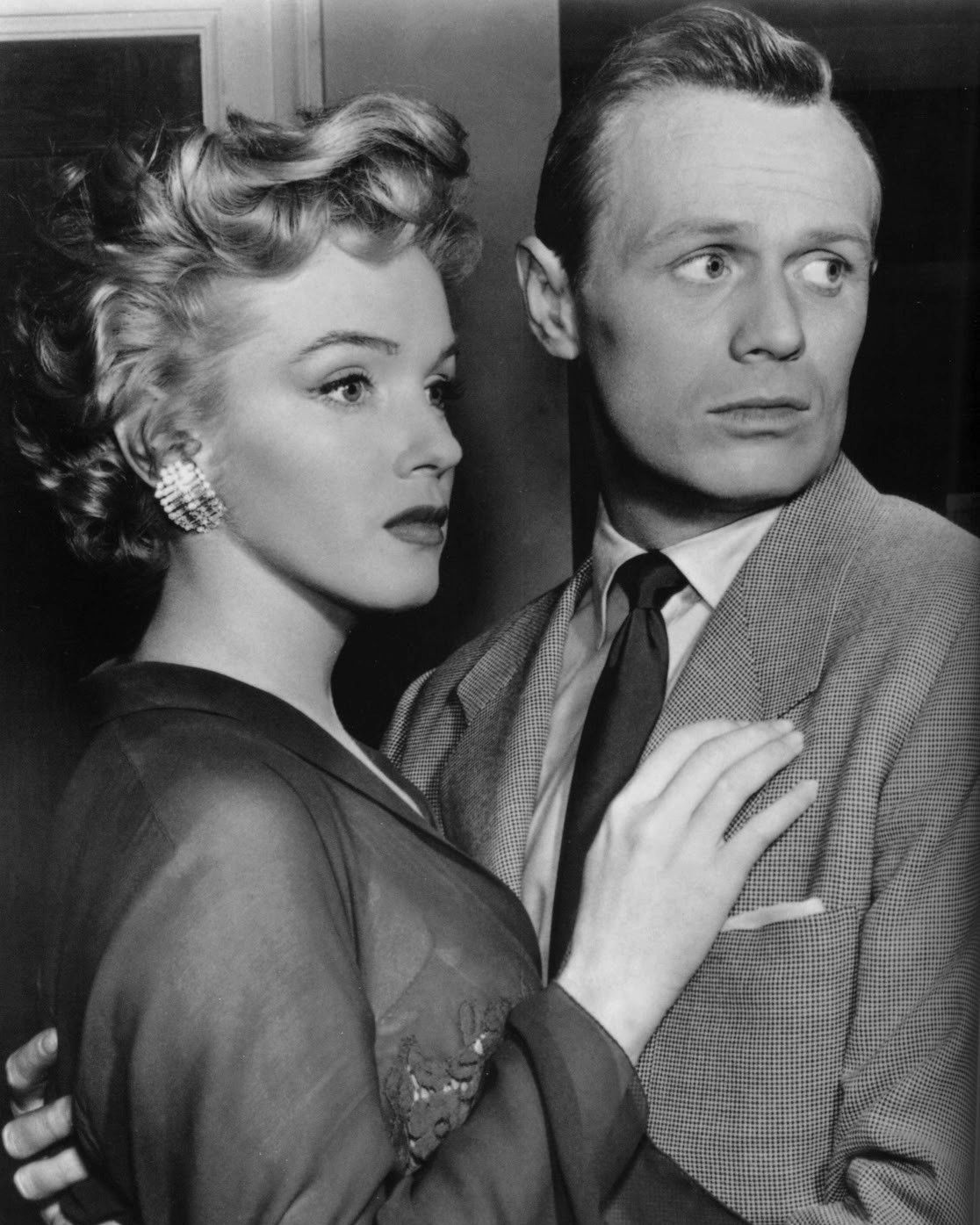
Was she a victim of the men she married and the misogynist industry she worked in, like the Ana de Armas film Blonde (2022) portrays her? How much agency did she have in how she was portrayed?
It is easy to dismiss Monroe as a victim of men who exploited her (and there is no doubt that she lived at a time when exploitation of women in the movie industry was rife) and as the stereotypical dumb blonde that many of her film roles cast her in.
However, her life, career and the history of public perception are full of contradictions: while her photos are still ubiquitous, few of her films are still being watched. Those that perpetuate the stereotype of the dumb blonde do much better than darker ones like Don’t Bother to Knock, Niagara or The Misfits.
My favourite photo in the whole exhibition is Eve Arnold’s 1955 photograph of Monroe reading James Joyce’s Ulysses - I always wondered whether this was a shot taken to pretentiously promote the perception that she was smarter than her public image suggests.
Eve Arnold’s recollection from the shoot is preserved in a scholarly article about the novel by Richard Brown:
“She said she kept Ulysses in her car and had been reading it for a long time. She said she loved the sound of it and would read it aloud to herself to try to make sense of it - but she found it hard going.”
I read Ulysses at uni and I can tell you that I found it hard going, too. I used to look at this photo as a pretentious attempt to bolster her intellectual credentials. The Eve Arnold quote changed my mind and made me look at this photo in a broader context: it was taken during a period when she had ditched Hollywood to move to New York to attend the famous Actors Studio. It was part of her purposeful effort to read more complex works of fiction. However, it seems the book genuinely just happened to be in her car that day. Furthermore, this was a low-key shoot that Arnold did not publish until long after Monroe’s death - very different from the deliberate PR stunt I originally believed it to be.
My takeaway from the exhibition is that Monroe was very much in control of her image from early on and that the sexualised blonde was an image that she carefully curated and made fun of at the same time.
The effort the actress invested in creating the “Marilyn Monroe look” with her makeup artist, the lighting tests, the retouching marks, the negotiations with movie studios, her creation of her own production company - it’s all there. Monroe understood the camera from a very young age and the show lets you watch her work with it, collaborating with some of the best photographers of the time.
That work led to “the most powerful star image that Hollywood ever produced”, as Lucy Bolton, Professor of Film Philosophy at Queen Mary University of London, says in a History Extra podcast about Monroe. (She is also one of the contributors to the excellent exhibition catalogue.) Neither the podcast nor the exhibition resolves the tension between Monroe’s desire to be taken seriously as an actress and her extraordinary success in creating an image of herself that projects artless sex appeal.
The exhibition runs until 6th September 2026 and the gallery has added Thursdays to its usual late openings on Fridays and Saturdays (last entry at 8pm, closes at 9pm).
Links
National Portrait Gallery Marilyn Monroe: A portrait
The official catalogue on Amazon - This is an affiliate link, which earns me a small commission. If you prefer to order it directly from the gallery, click here instead.
The Lucy Bolton “History Extra” podcast
References
Richard Brown, “Marilyn Monroe Reading Ulysses: Goddess or Post-Cultural Cyborg?” in Joyce and Popular Culture, ed. R. B. Kershner (Gainesville: University Press of Florida, 1996), 174.